
CF-PET (carbon-fibre reinforced PET)
PET stiffened with carbon fibre. Stiff, and it takes up less moisture than nylon.
The numbers.
General reference values for CF-PET, not DBZ test results. Filament grades differ, so ask us for the datasheet before you design to a number.
Properties
| Density | 1.3 g/cm³ (81 lb/ft³) |
|---|---|
| Dielectric Constant (Relative Permittivity) | 3.0 |
| Dielectric Strength (Breakdown Potential) | 20 kV/mm (508 V/mil) |
| Elastic (Young’s, Tensile) Modulus | 5.0 GPa (0.72 x 10⁶ psi) |
| Elongation at Break | 10% |
| Flexural Modulus | 4.5 GPa (0.65 x 10⁶ psi) |
| Flexural Strength | 110 MPa (15.9 x 10³ psi) |
| Glass Transition Temperature | 75°C (167°F) |
| Melting Onset (Solidus) | 250°C (482°F) |
| Shear Strength | 70 MPa (10.2 x 10³ psi) |
| Specific Heat Capacity | 1500 J/kg-K |
| Strength-to-Weight Ratio | 60 kN-m/kg |
| Tensile Strength: Ultimate (UTS) | 90 MPa (13 x 10³ psi) |
| Thermal Conductivity | 0.22 W/m-K |
| Thermal Diffusivity | 0.18 |
| Thermal Expansion | 65 µm/m-K |
| Water Absorption After 24 Hours | 0.3% |
Print settings
| Printing Temperature | 240-260°C |
|---|---|
| Flow Tweak | 0.95 |
| Bed Temperature | 70-90°C |
| Bed Preparation | Use a PEI sheet or apply a specialized adhesive for optimal adhesion |
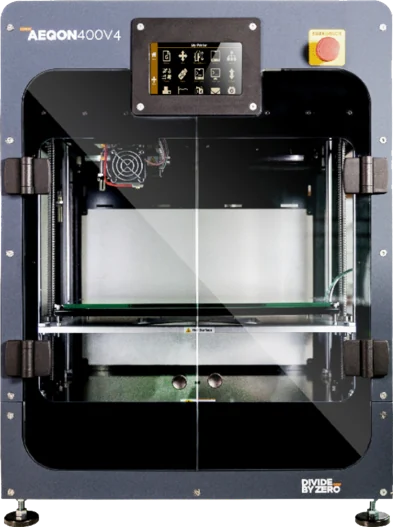
Which DBZ machines print it.
The machines whose specification table lists CF-PET, drawn to scale with each other.
About CF-PET.
Overview
Carbon Fiber Reinforced PET (CF PET) is a composite filament that combines the properties of PET (Polyethylene Terephthalate) with carbon fiber to enhance strength, rigidity, and thermal stability. CF PET is known for its high dimensional stability, low warpage, and excellent surface finish, making it ideal for engineering applications and high-performance parts.
Advantages
-
High Strength and Rigidity
The addition of carbon fiber significantly increases the tensile strength and stiffness of PET, making it suitable for structural components.
-
Dimensional Stability
Offers excellent dimensional stability and reduces warping, ensuring accurate and reliable prints.
-
Heat Resistance
Can withstand higher temperatures compared to standard PET, making it suitable for applications that operate in hot environments.
-
Smooth Surface Finish
Provides a high-quality surface finish that requires minimal post-processing.
-
Chemical Resistance
Retains the chemical resistance properties of PET, making it suitable for parts exposed to various chemicals.
Disadvantages
-
Abrasion
The carbon fibers are abrasive to standard nozzles, requiring the use of hardened steel or similar wear-resistant nozzles.
-
Moisture Sensitivity
CF PET is hygroscopic and must be stored in a dry environment to prevent moisture absorption, which can affect print quality.
-
Printing Temperature
Requires higher printing temperatures, which may not be compatible with all 3D printers.
Features
-
High Modulus and Strength
Ideal for parts requiring superior mechanical properties and rigidity.
-
Heat Resistant
Suitable for applications exposed to high temperatures.
-
Dimensional Stability
Reduced warping and excellent dimensional accuracy during printing.
-
Smooth Finish
Provides high-quality prints with minimal post-processing.
Additional Considerations
-
Nozzle Wear
Use hardened steel nozzles or similar wear-resistant materials due to the abrasive nature of carbon fibers.
-
Storage
Store CF PET filament in a sealed container with desiccant to prevent moisture absorption.
-
Print Quality
Ensure proper bed adhesion and controlled printing environment for high-quality prints.
Application Examples
-
Automotive Parts
Suitable for creating durable and heat-resistant automotive components.
-
Aerospace Components
Ideal for lightweight and strong parts for aerospace applications.
-
Engineering Prototypes
Perfect for prototyping mechanical parts that require high strength and rigidity.
-
Consumer Products
Used for printing high-performance consumer goods that benefit from enhanced strength and durability.
By understanding these properties and considerations, you can effectively use Carbon Fiber Reinforced PET (CF PET) in your 3D printing projects to achieve high-quality, durable, and high-performance results.
CF PET remains a preferred choice for many 3D printing applications due to its exceptional strength, rigidity, and heat resistance, making it ideal for both industrial and consumer applications.
See it on your own part.
Send one 3D file: an engineer replies within 2 working days, and your test part is dispatched within 7 working days of accepting the file, printed at our cost.